RoostTop
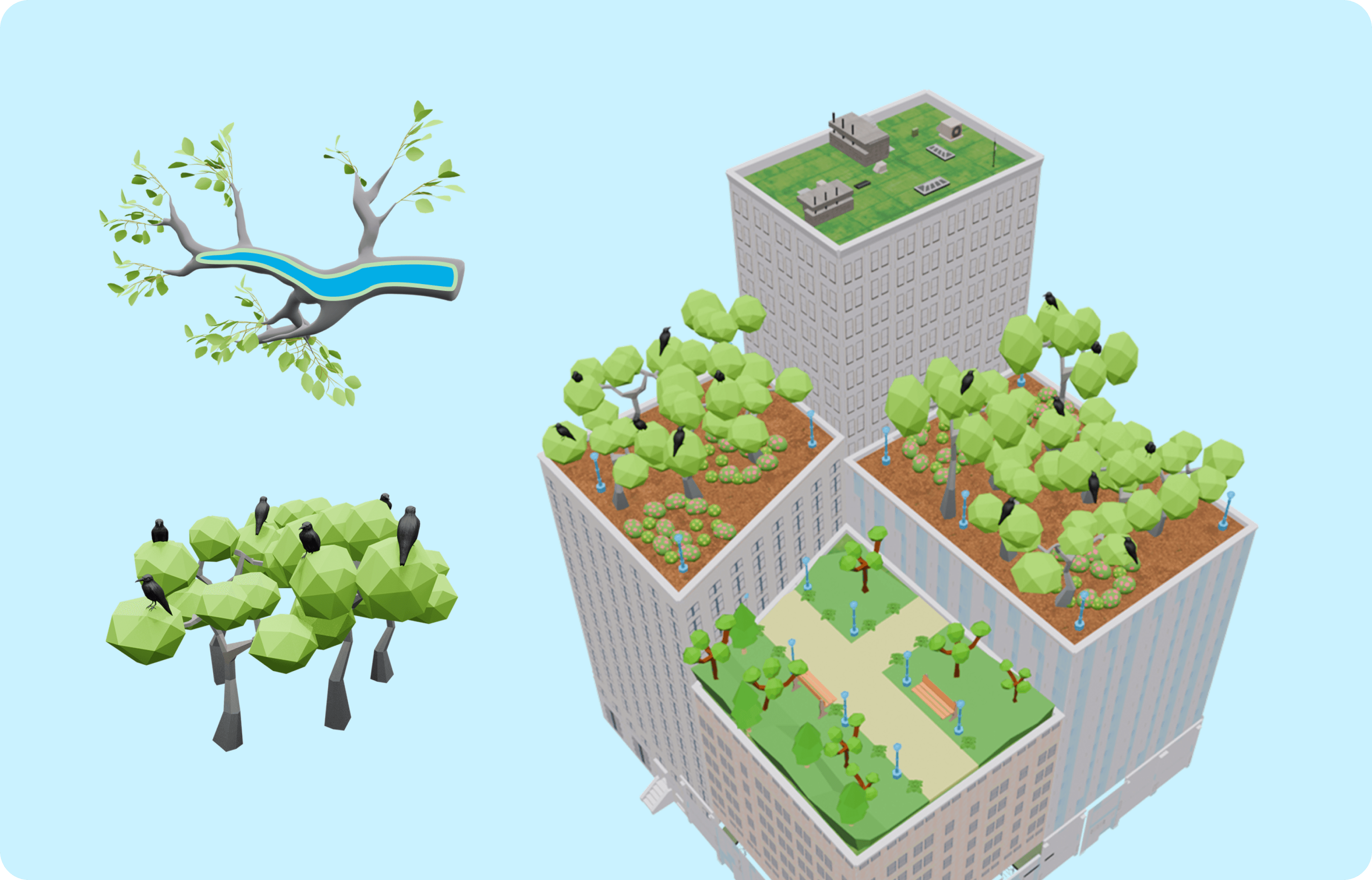
Imagining a rooftop roosting habitat for American crows to help humans and crows better coexist in urban cities together.
Project Info
My Role:
Gather research about American Crows' lifestyles, behaviors, and ecophysiology to inform design decisions
Ideate design concepts & features to help solve human-crow conflicts in urban-living
Create visuals and 3D model prototype of RoostTop
Design Goals:
Avoid scaring or inflicting harm on crows
Put crow-welfare first during relocation process (rather than purely for human benefit)
Improve crow-human coexistence and human perception of crows from “pests” to more like friendly “neighbors”
Help crows coexist in shared spaces with humans as urbanization continues to grow
Show Details
Overview
RoostTop: Better roosting. Better neighbors.
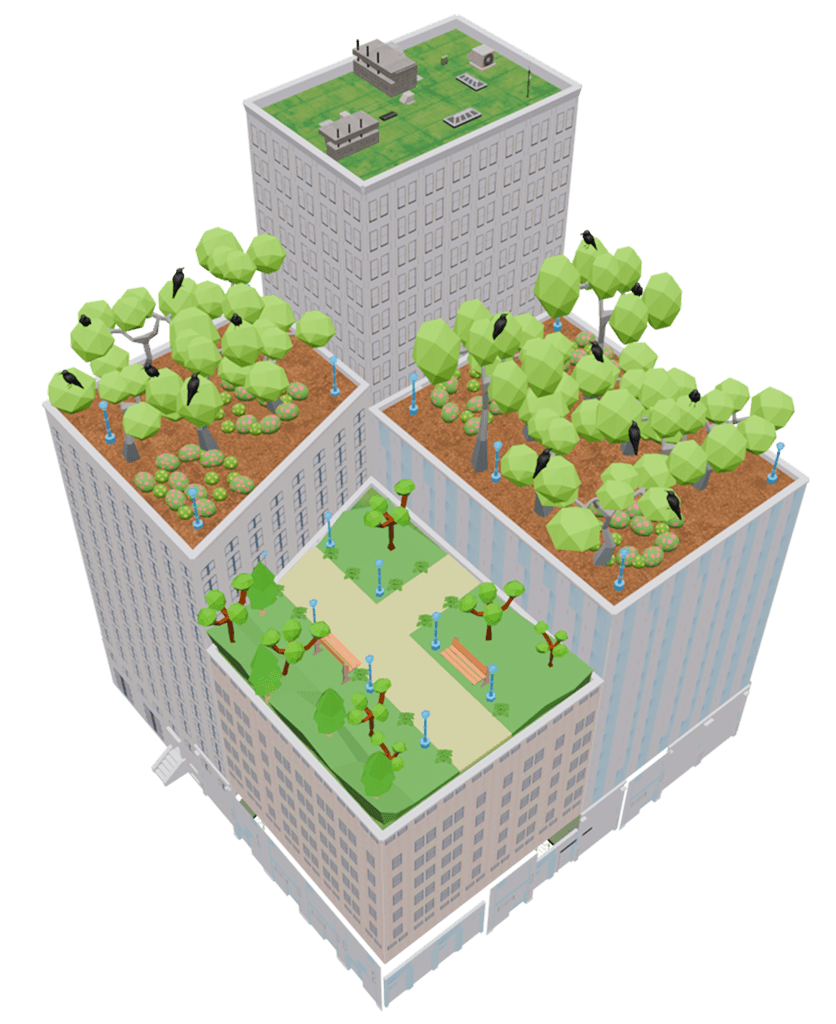
The American Crow has historically been abundant throughout the United States. Even as human-urbanization expanded, these crows have adapted to living alongside humans in their towns & cities. However, tensions between crows and humans sharing urban spaces still remain, and that is where RoostTop comes in! RoostTop is a rooftop nesting habitat designed for American crows roosting in cities in order to encourage better urban coexistence with humans.
There are 3 main components to RoostTop. First, the "Roosting Trees" are a set of artificial trees designed to mimic crows’ natural roosting habitat. The Roosting Trees are part of an overall "Self-Sustaining Habitat" that also has some nifty features working in tandem to support the crows. And finally, the "Perfect Skyline Locations" refer to the types of commercial-use buildings and non-residential areas where RoostTop is best suited to be built so that crows and humans can live harmoniously in urban areas together.
Problem
It’s Tough Being a Crow in the Big City!
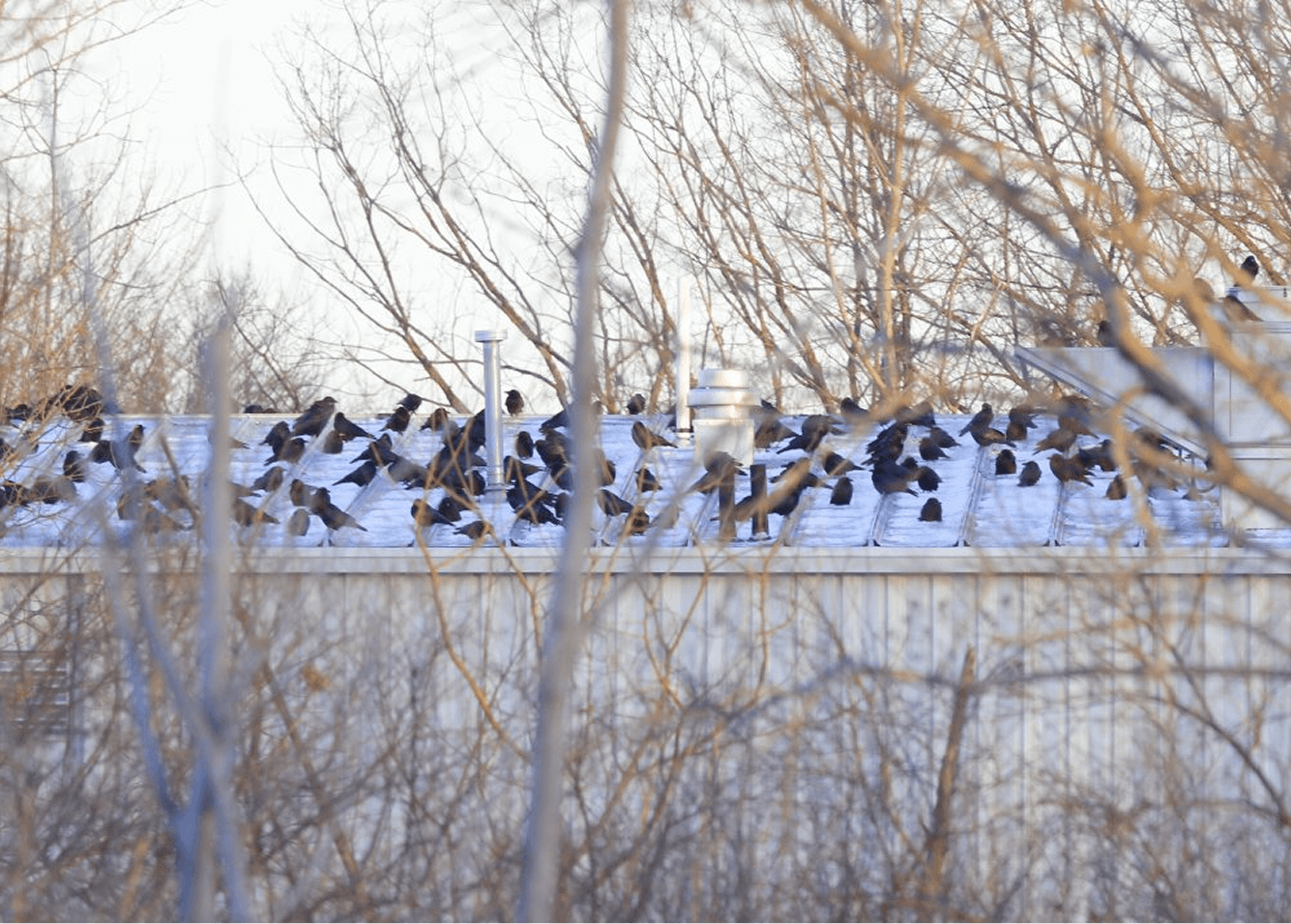
A large number of crows fly into downtown city areas to roost every night, looking for warmth, safety, and capacity for their large murders of hundreds to thousands of crows. However, in cities with fewer tall trees, these large roosts will opt for residential tall buildings instead, leading to frequent noise and mess complaints from their human residents.
Why do crows want to Roost in cities anyways?
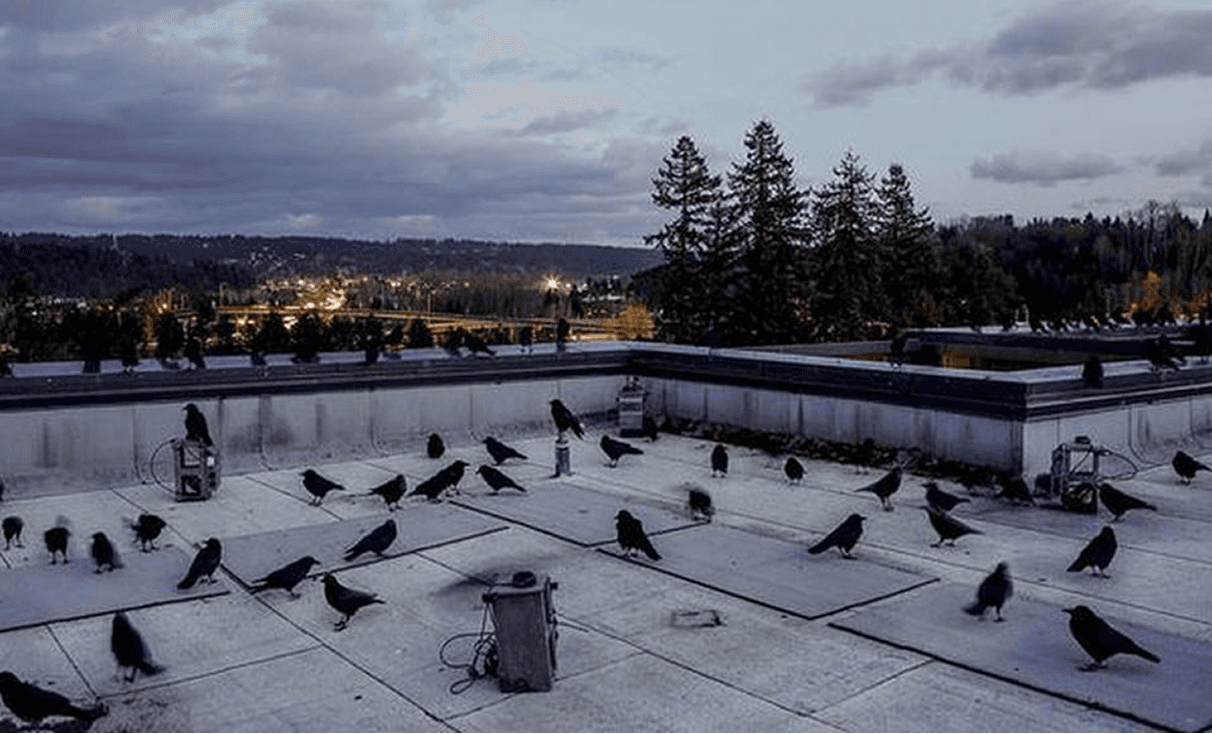
Urban Heat Island (UHI) effect makes cities feel warmer than surrounding woodlands and suburbia
They’re afraid of the dark City night lights provide a sense of safety from nighttime predators
Crows prefer to roost in the upper branches of tall trees; tall buildings are also a good substitute
Why are humans so mad about it?
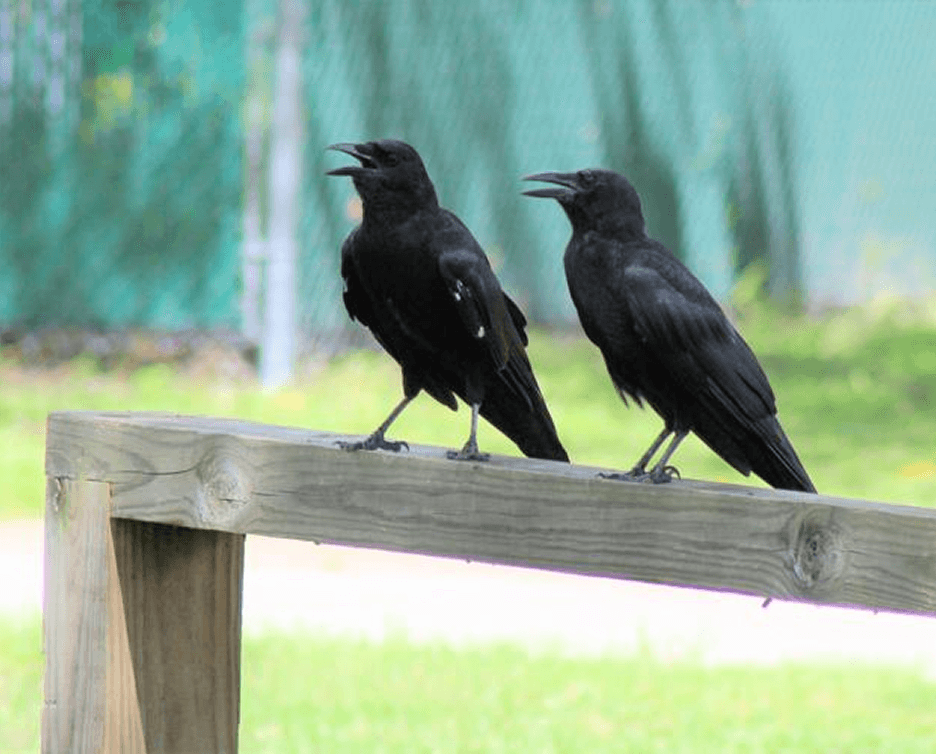
Especially in cities with few tall trees, crows opt to roost in buildings where humans reside
Noise complaints during dusk and early dawn when roosting crows are most numerous and active
Bigger murders of crows leave behind large fecal mess at (and on the way to) roosting sites
In response to human complaints, local agencies have tried various solutions to relocating crow roosts from undesirable areas, but almost all of them involve scaring or harming crows in some way. Even if humans were able to successfully scare away the roost, the crows won’t completely leave the attractive area. Instead they will just pick the nearest similar, just as undesirable, roosting site.
So it got me thinking, is there really no non-harmful way to help relocate crow roosts and solve this problem more permanently?
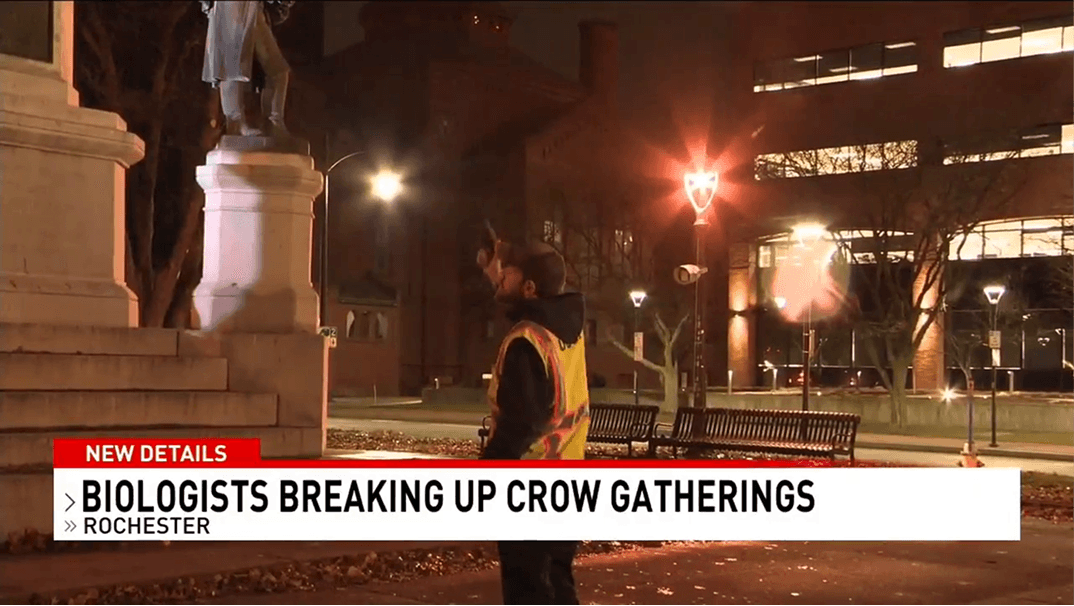
How might we safely redirect crows from human-conflict areas to approved roosting spots and help them better coexist with humans?
Process & Ideation
Solution: Build a far more attractive roosting alternative by more readily providing the amenities crows want in their ideal roost.
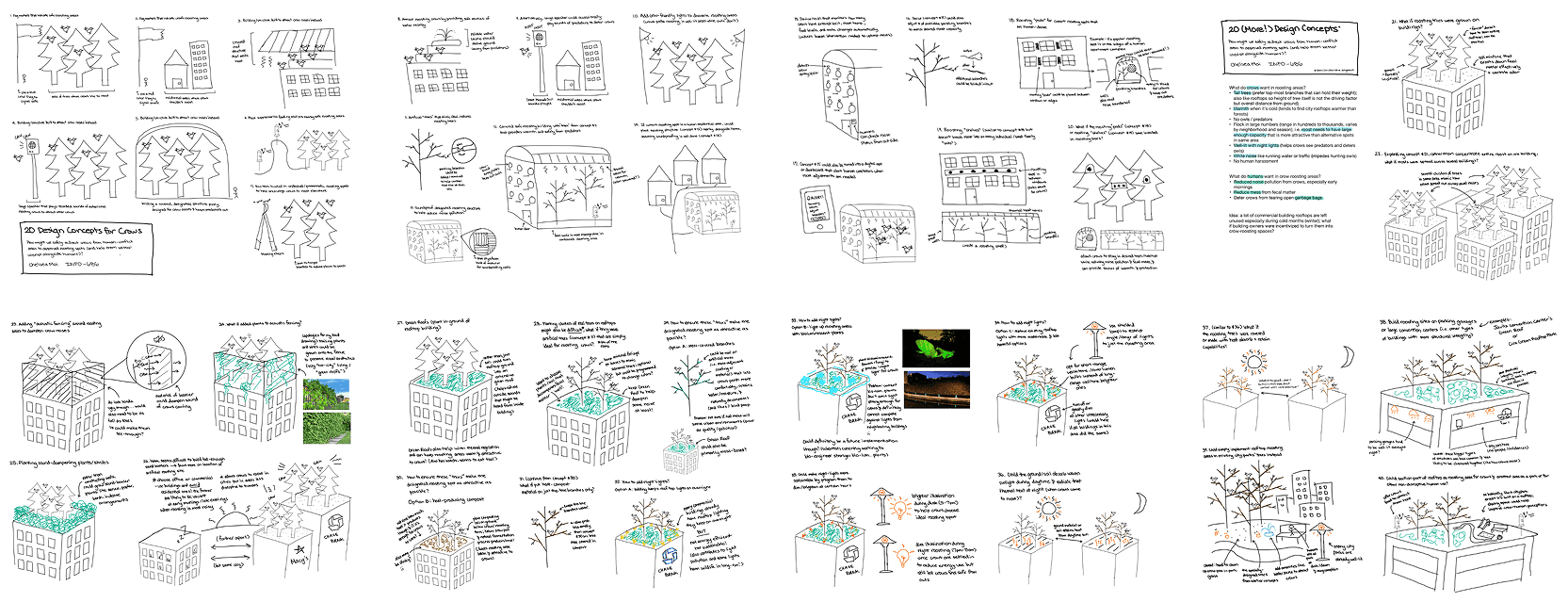
Step 1: Start thinking like a ‘Bird-brained’ Crow
Step 2: How to Build the Perfect Roost 101
Core Design Features
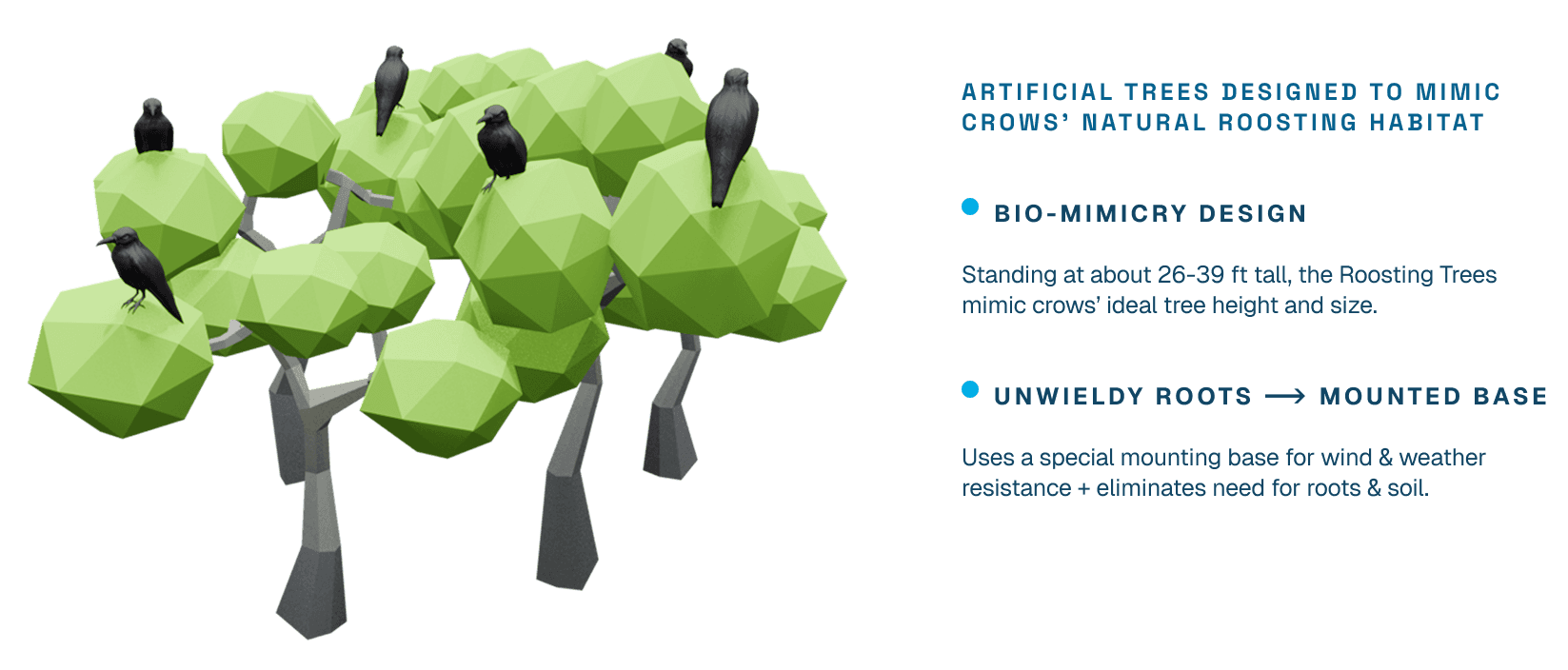
RoostTop: The Roosting Trees
The Roosting Trees are a set of artificial trees designed to mimic crows’ natural roosting habitat, but made compatible for being placed on city building rooftops. Standing at about 26-39 feet tall, the Roosting Trees mimic crows’ ideal tree height and size, and they use a special mounting base for wind & weather resistance. Previous iterations of RoostTop imagined planting real trees on rooftops, but the roots, soil, and overall maintenance of such real trees would likely be incompatible with the structural integrity of many buildings. In addition, I ideated a 3-layered material structure that could offer structure, warmth, and self-cleaning to make the Roosting Trees even more attractive to roosting crows.
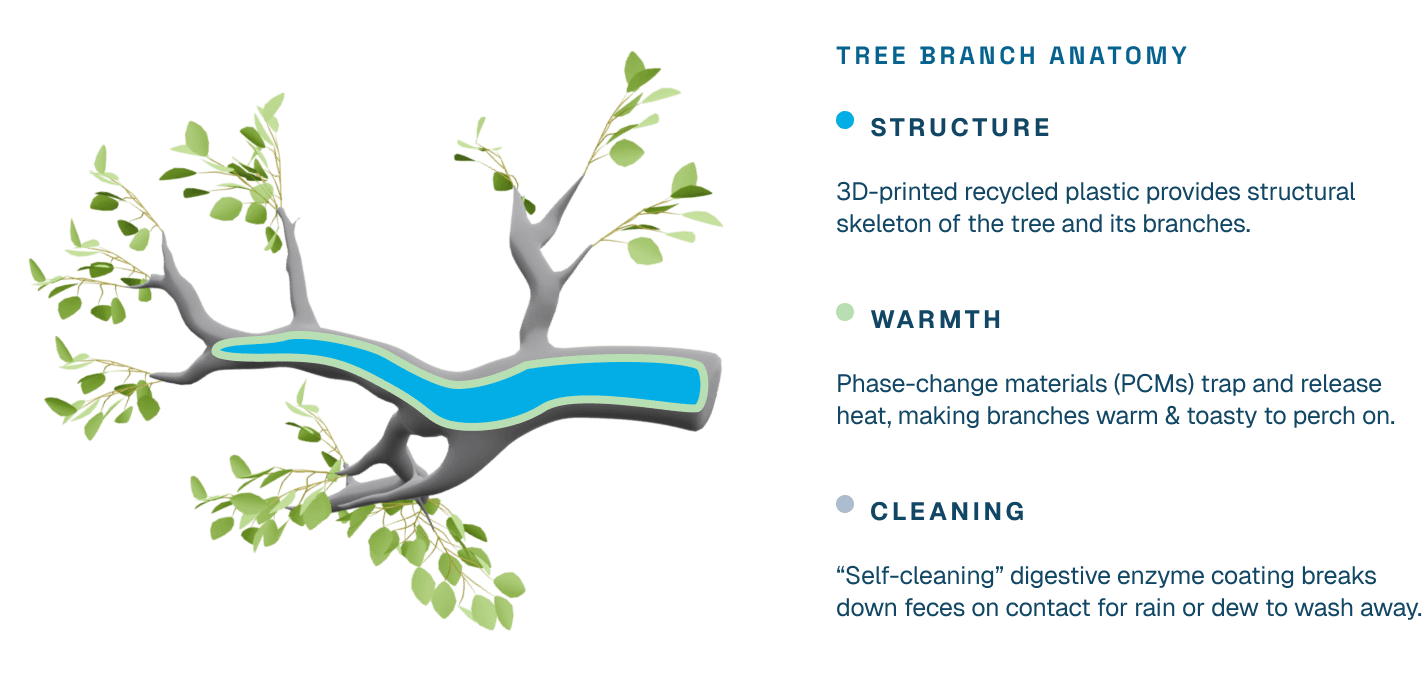
RoostTop: The Self-Sustaining Habitat
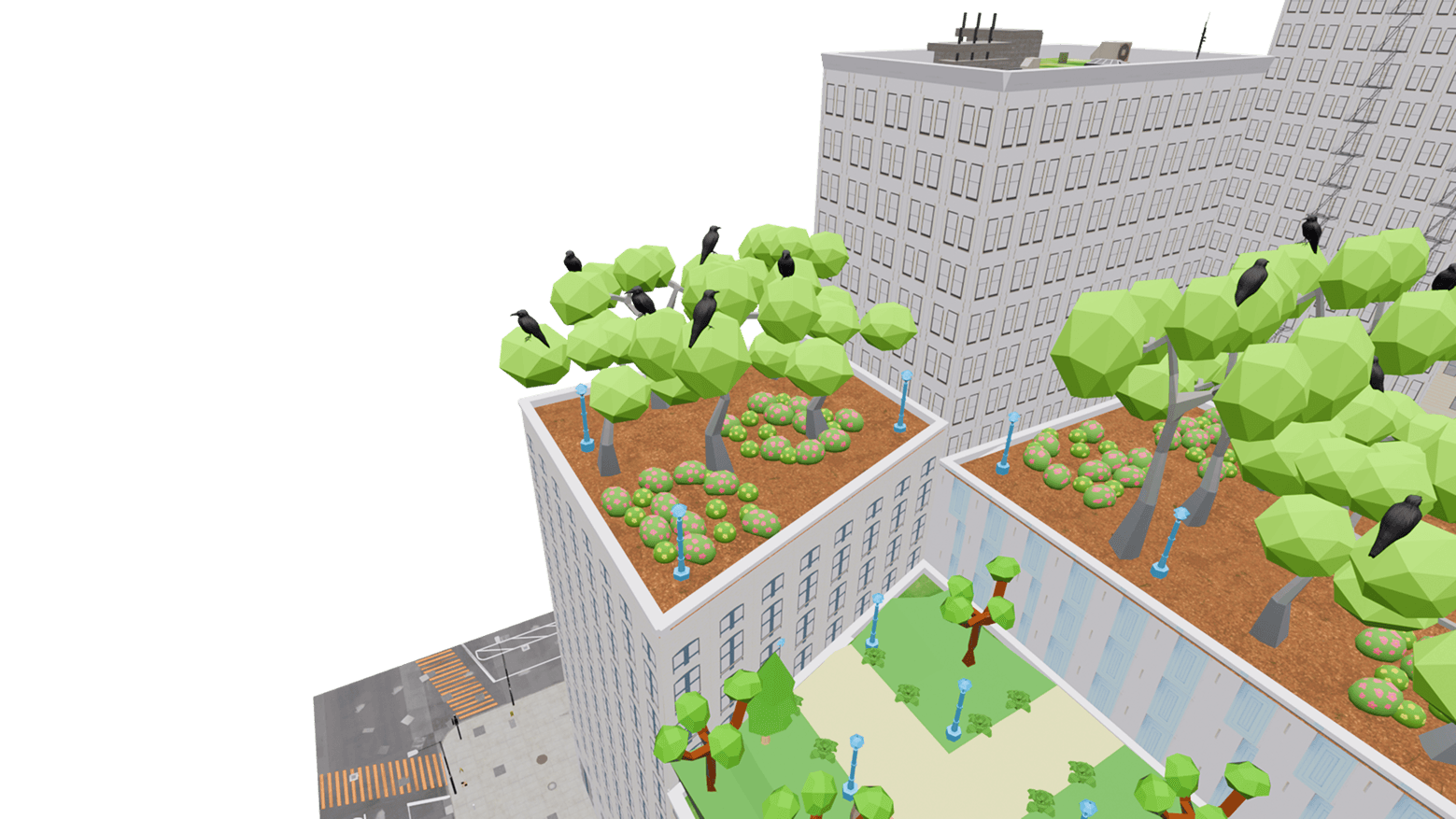
The Roosting Trees are part of an overall roosting habitat that also has some nifty features working in tandem to support the crows. The first is a ‘self-cleaning’ ground that is made of layers of hardwood chips and gravel covered in the same “self-cleaning” enzymes to help break down and drain feces. The second are night lights provided by solar-powered shield lamps that can be programmed to dim or brighten at certain hours to reduce overall energy use. And finally, adding ‘green-roof’ foliage in the form of small bushes, flowers, gardens, and other real greenery approved for city roofs can provide additional eco-benefits for crows and their cohabitating humans.
RoostTop: The Perfect Skyline Location
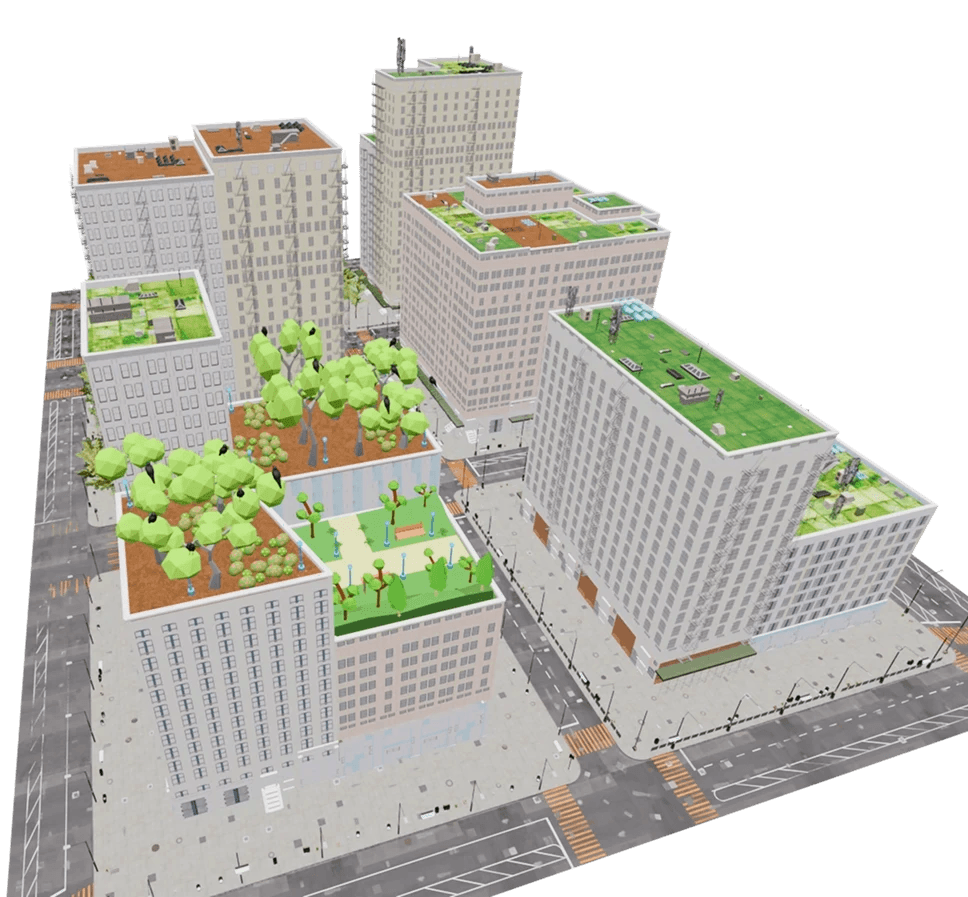
RoostTops are best built on commercial-use buildings and in non-residential areas likely to be vacant during early mornings and late evenings when roosts are most active and noisy. Places like office buildings, retail centers, event halls, university buildings, and parking garages make good contenders for where a RoostTop could be installed. The size of each RoostTop can vary to match what each individual building can space and support, but it would be best to space individual RoostTops across a group of nearby buildings, as this would also mimic how crow roosts tend to disperse across multiple tree groves in a park for example.
Final 'User' Journey
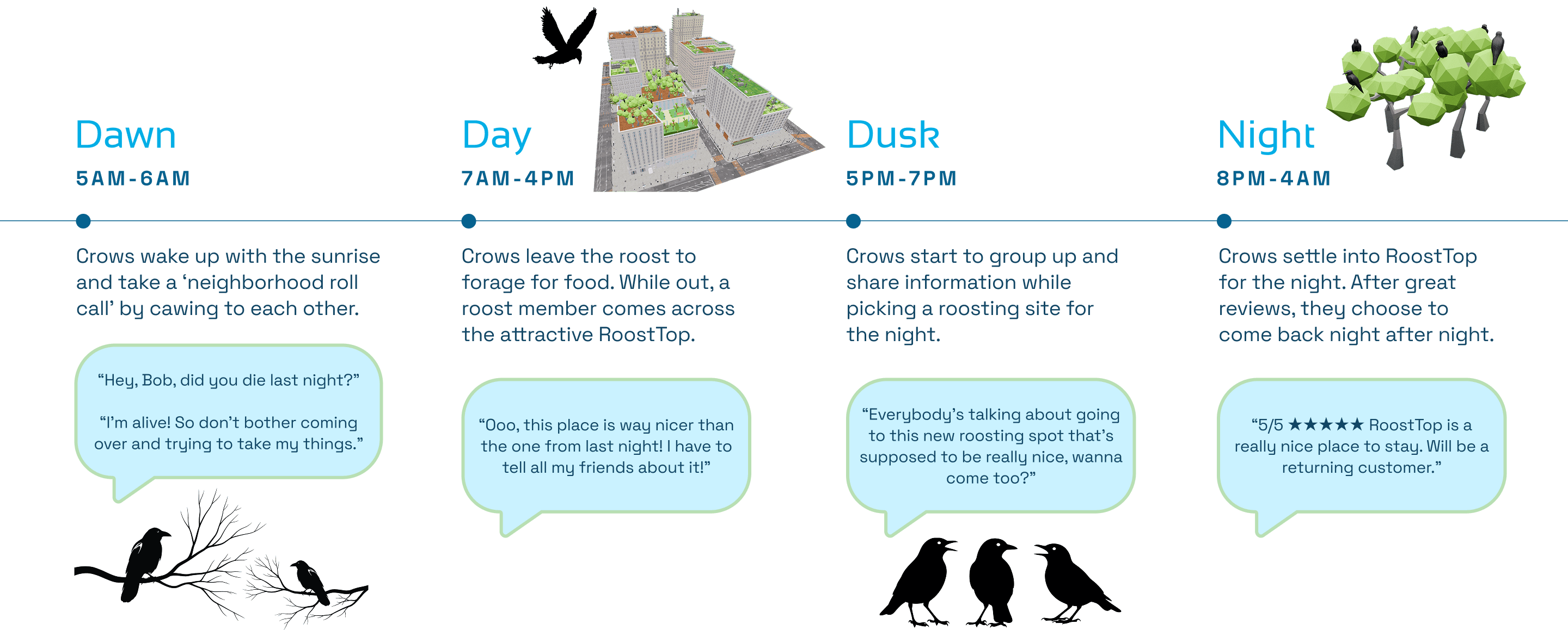
“A Day in My Life”: RoostTop Edition
But how does a murder of crows find and adopt a RoostTop anyways? Let's take a look at the day in the life of a city crow. Some crows will try staying at RoostTop for the night, and with their great sense of memory, will quickly become loyal tenants of RoostTop and spread the word. Crows will love being able to reliably return to a safe and warm roosting spot after a long hard day of foraging for food and survival.
Takeaways & Next Steps
Crows and humans may share living spaces, but designing for them is fundamentally different!
Forget "Human-Centered" Design, Think "Crow-Centered" Design — It may seem obvious that crows and humans are different species, so of course, the way you need to approach designing for crows will be different as well. But how does one design for crows? There's no formal research or education into what it means for a design process to be "crow-centered". So for this project, I needed to make my own loose guidelines that define "crow-centered" design methods. Specifically, "crow-centered" design to me means making sure the design benefits crows, first and foremost, rather than designing something with the intention that it benefits humans at the cost of the crows' well-being, regardless how small. This then served as the foundation for why I wanted to focus my design direction on making a solution that 'positively-redirects' crows roosts, rather than 'negatively-deterring' them.
Of course, RoostTop is not the perfect, final solution! — I also would like to acknowledge that RoostTop is not an all-encompassing ‘perfect’ solution to relocating existing crow roosts. It's likely you would still need other methods for getting crows to relocate from their original roosting spots in the first place. However, I think it's just as important to make sure there's readily available alternatives for the relocating crows, so that they are inclined to pick the designated RoostTops that would help them peacefully coexist with humans. I would advise however that relocation methods should always aim to be non-harmful to the birds and aim to limit the amount of stress to be inflicted as well. A non-harmful and ethical relocation method for 'nudging' a roost out of an undesirable area would work best in tandem with RoostTop, which will provide an attractive roosting home for the crows to safely move to.
Special thank you to Professor Nancy Smith for your instruction and supportive feedback for this project and throughout the duration of your academic course. :)